venerdì 29 settembre 2017
martedì 26 settembre 2017
lunedì 4 settembre 2017
giovedì 28 aprile 2016
طلاب جامعة النيلين يخرجون الى الشوارع شاهرين الهتاف احتجاجاً على مقتل طالب الأهلية
04-27-2016 04:44 PM
بعد فعالية ثورية أقامها طلاب حزب البعث العربي الاشتراكي اليوم الاربعاء الموافق 27 /4 /2016 احتجاجاً على اغتيال طالب بجامعة كردفان على أيدي اجهزة الامن بمدينة الابيض، وقد تجمع الطلاب في مخاطبة حاشدة حيث ترحم متحدث الرابطة علي روح الشهيد ابوبكر وحث الطلاب الي ضرورة الخروج الى الشوارع لاسقاط نظام المؤتمر الوطني والاقتصاص من القتلة.وبمجرد سماع خبر استشهاد طالب جامعة الاهليه "محمد الصادق" انضم الطلاب البعثين وعدد من الطلاب الديمقراطين لفعالية الطلاب الاتحاديين، ومنها الى كلية الاداب وبعدها الى ميدان "جاكسون" مع الطلاب الديمقراطيين والطلاب الاتحاديين وعلت هتافات الطلاب:
* مقتل طالب مقتل أُمّه ..
* يسقط يسقط حكم العسكر ..
* وهتافات أخرى ملئت سماء النيلين.
venerdì 28 novembre 2014
Destroy THE SUDAN.
Tribal Clashes Inflict Heavy Toll
By REUTERSNOV. 27, 2014
At least 133 people have been killed and more than 100 wounded in clashes between two groups belonging to an Arab tribe in West Kordofan State, a tribal leader said Thursday. The clashes between the Awlad Omran and Al-Ziyoud groups of the Arab Mesiria tribe began with a dispute over land, said Mukhtar Babo Nimr, the leader of the tribe. West Kordofan is the main oil-producing state in Sudan, and it borders the turbulent Darfur region and the nation of South Sudan. Arab tribes, many of which were armed by the Sudanese government to help end an insurgency by mainly non-Arab rebels in Darfur, have turned their guns against one another in a surge of conflict over resources.
By REUTERSNOV. 27, 2014
At least 133 people have been killed and more than 100 wounded in clashes between two groups belonging to an Arab tribe in West Kordofan State, a tribal leader said Thursday. The clashes between the Awlad Omran and Al-Ziyoud groups of the Arab Mesiria tribe began with a dispute over land, said Mukhtar Babo Nimr, the leader of the tribe. West Kordofan is the main oil-producing state in Sudan, and it borders the turbulent Darfur region and the nation of South Sudan. Arab tribes, many of which were armed by the Sudanese government to help end an insurgency by mainly non-Arab rebels in Darfur, have turned their guns against one another in a surge of conflict over resources.
giovedì 27 novembre 2014
Storia del - THE SUDAN -
Il Sudan, paese convertitosi all’islam in seguito all’invasione araba avvenuta nel IX secolo, subì da prima la presenza militare egiziana (1820 – 1882) e successivamente l’influenza coloniale inglese, che cercò di impedire militarmente le aspirazioni di autonomia del popolo sudanese.
Nel 1885 l’Inghilterra, perso il controllo della capitale Kartoum, fu costretta a lasciare il paese, che riconquistò successivamente nel 1898. A partire dal 1936 il Sudan fu scosso da lotte interne che videro fronteggiarsi i sostenitori dell'annessione all'Egitto e gli indipendentisti, grazie ai quali divenne indipendente nel gennaio del 1956.
La storia del Sudan è stata segnata da violenti conflitti interni che hanno visto fronteggiarsi la popolazione arabo-musulmana del Nord, detentrice da sempre del potere politico-militare, e le popolazioni animiste e cristiane del Sud. Gli equilibri interni furono inoltre minati dal susseguirsi di eventi cruenti. Le elezioni del marzo 1958 diedero vita ad un governo di coalizione che dopo pochi mesi fu costretto a lasciare il potere alla dittatura militare del generale Ibrahim Abbud, rovesciata successivamente nel 1964. Nel 1969 un nuovo colpo di Stato ha assegnò i pieni poteri al Consiglio Rivoluzionario del colonnello Jaafar el-Nimeiry, che proclamò la Repubblica Democratica del Sudan. Nonostante il pugno forte che caratterizzo questo periodo storico i governi che si susseguirono non furono mai in grado di stabilire un’intesa con la guerriglia che controllava la parte meridionale del Paese, e proprio per questo motivo non fu in grado di dotare il Sudan di una Costituzione federale.
La guerra civile, prolungatasi per quasi mezzo secolo, ha causato 2 milioni di morti e 4 milioni di profughi, diventando la più lunga e sanguinosa guerra dell'Africa. Tra il 1985 ed 1989 il potere viene preso e perso per ben tre volte: il 6 maggio 1985 Abdel R. Sewar el Dahb rovescia il presedente Jafar el Nimeiry; il 6 maggio 1986 sale al potere Ahmed Ali el Mirfhamiun; il 30 giugno 1989, con un ennesimo colpo di stato, si insedia Omar Hassan Ahmed al Bashir. E sarà proprio il regime del generale golpista che giuderà il paese fino ai nostri giorni.
Durante gli anni 80 e 90 le autorità di Kartoum attuarono una politica di tipo islamico fondamentalista che portò il Paese all’isolamento internazionale. Malgrado lo sforzo militare, alla fine del 1995 i separatisti del sud sferrarono una vittoriosa offensiva militare. Nello stesso anno il regime sudanese, accusato di essere coinvolto nell'attentato al presidente egiziano Mubarak, si trovò a fronteggiare le truppe del Cairo in scontri armati alla frontiera. Nel 1999 fu annunciato una tregua unilaterale con i ribelli sud, e l’anno successivo, dopo aver sciolto il parlamento, fu dichiarato lo stato d'emergenza.
Le cause del conflitto tra Khartoum e gli indipendentisti del Sud, organizzati nell'Esercito di Liberazione Popolare (SPLA), vanno ricercate in primo luogo nelle diverse radici etniche, religiose, culturali e linguistiche delle due popolazioni. Non va comunque dimenticato l’aspetto economico della controversia. Il Sud si trova in una posizione geograficamente più favorevole caratterizzata:terreni fertili, abbondanza d’acqua dovuta alla presenza del Nilo, risorse petrolifere. L’inizio del nuovo millennio è stato però caratterizzato da una fase di moderato ottimismo, lasciando uno spiraglio a quelle speranza di pace che, in questo continente, è una merce così rara e preziosa, pagata sicuramente a caro prezzo.
Con il patrocinio di Italia, Gran Bretagna, Norvegia e soprattutto Stati Uniti, nel 2002 viene iniziata una trattativa tra Kartoum e il SPLA. Il 9 gennaio del 2005 viene firmato un accordo di pace, nel quale non viene presa in considerazione la crisi del Darfur, che prevede un’ampia autonomia per il Sud e la ripartizione delle risorse e dei poteri. Nel trattato è stato anche stabilito che un periodo di transizione, che si concluderà nel 2011, le popolazioni cristiano-animiste del Sud decideranno, attraverso un referendum, se diventare una Regione autonoma all’interno di uno stato federale o dare vita ad uno stato indipendente. Intanto, dalla seconda metà del 2005 dovranno essere impiegati 10.000 Caschi Blu per vigilare gli accordi di pace e sulle sanzioni riguardanti l’estrazione del petrolio nella regione.
Ma i problemi del Sudan non si fermano qui. La crisi del Darfur, definita da tutti come un vero e proprio genocidio, è stata al centro della scena politico-militare Sudanese per tutto il 2004. Tutto nasce nel febbraio 2003, quando i ribelli del Darfur Liberation Army (DLA) proclamarono l’indipendenza di una zona della regione occidentale del Darfur, ribellandosi alle violenze perpetrate dalle milizie paramilitari arabe Janjaweed armate dal governo del generale al Bashir. Entrambe le parti sono di religione mussulmana e di stesso ceppo etnico-colturale, ma dedite ad attività differenti: agricoltori i primi, nomadi e pastori i secondi. Ed è proprio nel controllo delle terre e delle risorse d’acqua che va ricercato il motivo centrale del conflitto. L’8 aprile 2004 in Ciad, la comunità internazionale, rea di non aver mai intrapreso azioni volte alla soluzione del problema, è riuscita ad ottenere un cessate il fuoco e ha dato inizio ai primi colloqui di pace svoltisi ad Addis Abeba. Questo comunque non ha fatto in modo che i soprusi ai danni della popolazione civile continuassero, nonostante l’operazione di peacekeeping lanciata dall’Unione Africana (Ciad, Kenya, Ruanda, Senegal, Sudafrica). Anche se spostati in Nigeria i negoziati continuano e l’ONU ha minacciato Kartoum di sanzioni economiche. Intanto la Corte Penale Internazionale ha avviato un’indagine intesa ad identificare le responsabilità per la catastrofe e per i crimini contro l’umanità perpetrati nel paese e che hanno causato più di 2.000.000 di sfollati e circa 300.000 vittime.
La cosa non sarà facile visto che una commissione d’inchiesta dell’ONU ha già assolto il governo di Kartoum per “non aver perseguito una politica di genocidio” e che il Tribunale Internazionale ha dichiarato che “nessun cittadino verrà giudicato da una corte straniera”. Non ultimo è quanto la le potenzialità di produzione petrolifera del paese influenzeranno gli interessi internazionali, che vedono in prima linea attori come Cina, Stati Uniti, Inghilterra, Francia e Russia.
mercoledì 26 novembre 2014
slavery is still inthe united states of evel
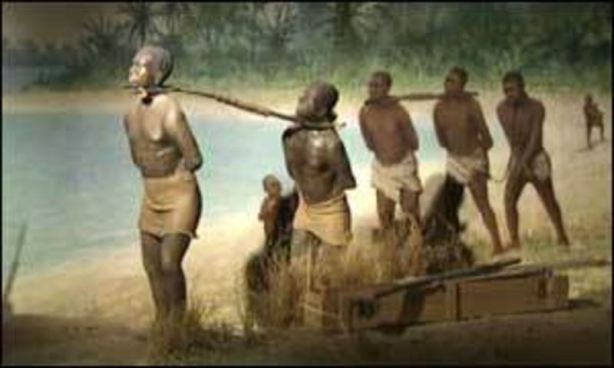
The white police man had been free but the NEGER died slavery is still in the UNITED STATES OF EVEL
Slavery in the United States was the legal institution of chattel slavery that existed in the United States of America in the 18th and 19th centuries. Slavery had been practiced in British North America from early colonial days, and was recognized in the Thirteen Colonies at the time of the Declaration of Independence in 1776. When the United States was founded, even though some free persons of color were present, the status of slave was largely coincident with being of African descent, creating a system and legacy in which race played an influential role. After the Revolutionary War, abolitionist laws and sentiment gradually spread in the Northern states, while the rapid expansion of the cotton industry from 1800 led to the Southern states strongly identifying with slavery, and attempting to extend it into the new Western territories. The United States was polarized by slavery into slave and free states along the Mason-Dixon Line, which separated Maryland (slave) and Pennsylvania (free).
Although the international slave trade was prohibited from 1808, internal slave-trading continued, and the slave population would eventually peak at four million before abolition.[1][2]
As the West opened up, the Southern states believed they needed to keep a balance between the numbers of slave and free states, in order to maintain a balance of power in Congress. The new territories acquired from Britain, France and Mexico were the subject of major political compromises. By 1850, the newly rich cotton-growing South was threatening to secede from the Union, and tensions continued to rise. With church ministers under pressure to preach slavery doctrine conforming to the local politics, the Baptist and Methodist churches split into regional organizations. When Abraham Lincoln won the 1860 election on a platform of no new slave states, the South finally broke away to form the Confederacy. This marked the start of the Civil War, which caused a huge disruption of the slave economy, with many slaves either escaping or being liberated by the Union armies. The war effectively ended slavery, before the Thirteenth Amendment (December 1865) formally outlawed the institution throughout the United States.
Slavery in the United States was the legal institution of chattel slavery that existed in the United States of America in the 18th and 19th centuries. Slavery had been practiced in British North America from early colonial days, and was recognized in the Thirteen Colonies at the time of the Declaration of Independence in 1776. When the United States was founded, even though some free persons of color were present, the status of slave was largely coincident with being of African descent, creating a system and legacy in which race played an influential role. After the Revolutionary War, abolitionist laws and sentiment gradually spread in the Northern states, while the rapid expansion of the cotton industry from 1800 led to the Southern states strongly identifying with slavery, and attempting to extend it into the new Western territories. The United States was polarized by slavery into slave and free states along the Mason-Dixon Line, which separated Maryland (slave) and Pennsylvania (free).
Although the international slave trade was prohibited from 1808, internal slave-trading continued, and the slave population would eventually peak at four million before abolition.[1][2]
As the West opened up, the Southern states believed they needed to keep a balance between the numbers of slave and free states, in order to maintain a balance of power in Congress. The new territories acquired from Britain, France and Mexico were the subject of major political compromises. By 1850, the newly rich cotton-growing South was threatening to secede from the Union, and tensions continued to rise. With church ministers under pressure to preach slavery doctrine conforming to the local politics, the Baptist and Methodist churches split into regional organizations. When Abraham Lincoln won the 1860 election on a platform of no new slave states, the South finally broke away to form the Confederacy. This marked the start of the Civil War, which caused a huge disruption of the slave economy, with many slaves either escaping or being liberated by the Union armies. The war effectively ended slavery, before the Thirteenth Amendment (December 1865) formally outlawed the institution throughout the United States.
Iscriviti a:
Post (Atom)


.png)
